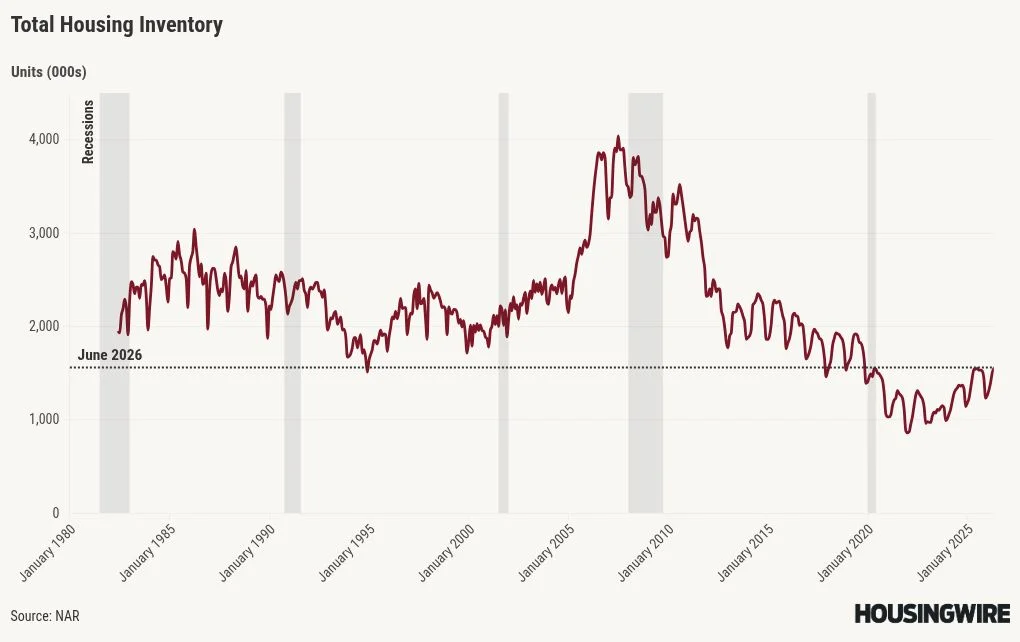
The current state of the U.S. housing market reveals an intricate relationship between demand and pricing dynamics—a mix that property professionals must understand as we navigate ongoing economic concerns. While headline figures indicate a general uptick in demand, the reality is that not all growth is created equal, and that disparity is crucial for strategic decision-making in real estate.
A Divided Demand Landscape
Analysis from HousingWire indicates that demand is, broadly speaking, holding up despite the challenges of high mortgage rates nearing 6.75%. Last week, pending sales reached 75,935—up from 69,636 a year ago—while mortgage purchase applications climbed by about 7% year over year. Yet, these numbers obscure the profound differences between various markets.
In recent months, two clear trends have emerged. In some areas, particularly those that experienced rapid growth during the pandemic, increasing demand comes alongside significant price adjustments. On the flip side, markets with stronger fundamentals are witnessing healthy sales growth with little need for concessions from sellers. Each scenario paints a distinctly different picture of market health and future resilience.
The Duality of Market Types
HousingWire delineates two categories of markets: those that thrived during the pandemic—like Phoenix, Austin, and Miami—and those with steady, balanced growth—such as Rochester and Detroit. The pandemic boom markets exhibit an average pending sales growth of 11.2% alongside weaker absorption rates and elevated inventory levels, averaging nearly three months of housing inventory.
What stands out is that 43.9% of listings in these booming areas have seen price cuts, suggesting sellers are still adjusting to a post-pandemic reality. Conversely, the structurally stronger markets report an average pending sales growth of 21.0% with much tighter inventory—just 1.4 months—alongside a lower price cut rate of 28.2%. This disparity underscores the necessity for industry players to differentiate between genuine resilience and a superficial recovery driven by price corrections.
Growth through Adjustments Versus Growth from Strength
Notably, cities with pre-pandemic stability like Rochester and Hartford are showing promising results without aggressive repricing strategies. For instance, Rochester reports a 41.1% increase in pending sales with price cuts affecting just 13% of listings. In these markets, strong absorption rates—averaging around 18.5%—and minimal inventory indicate a healthier interaction between supply and demand.
This distinction is critical: while markets like Austin might show impressive growth, it’s largely due to corrections necessitated by sellers' adjustments. These markets are fundamentally working through a period of recalibration, which may not be sustainable in the long term if the underlying fundamentals do not improve.
Implications for the Housing Sector
As housing professionals assess their strategies, a significant question looms: What precisely is driving demand? Understanding the nuances behind demand growth becomes essential. Growth in markets like Phoenix suggests dependence on seller concessions, while Rochester’s developments reflect a more balanced approach requiring fewer adjustments. Simply put, not every uptick signifies a robust recovery.
Housing leaders should keep an eye on absorption rates and inventory levels. A high absorption rate indicates a healthy market momentum where supply closely matches demand, while constrained inventory can suggest sustainable pricing power. This context provides a clearer picture of the market's trajectory and can inform investment strategies moving forward.
Looking Ahead: Growth Beyond Numbers
The housing market's ability to recover from elevated mortgage rates is no longer just about whether demand exists; it's increasingly about how sustainable that demand is. The market is revealing sophisticated layers that demand careful analysis—some areas are buoyed by aggressive adjustments, while others thrive thanks to a natural alignment of supply and demand.
For real estate professionals, this landscape necessitates a critical examination of local trends over generic national statistics. Are buyers genuinely returning, or are they merely responding to price cuts? The path forward will require vigilance and adaptation, as market conditions can shift rapidly. By focusing on the granular details of market dynamics, stakeholders can position themselves for success amid uncertainty.
For up-to-date insights into market signals at various levels—national, metro, and ZIP code—check out HousingWire Intelligence. Staying ahead of pricing trends and demand dynamics is critical as the economic framework continues to change. Understanding the underlying factors driving demand can make all the difference for real estate professionals navigating this complex landscape.