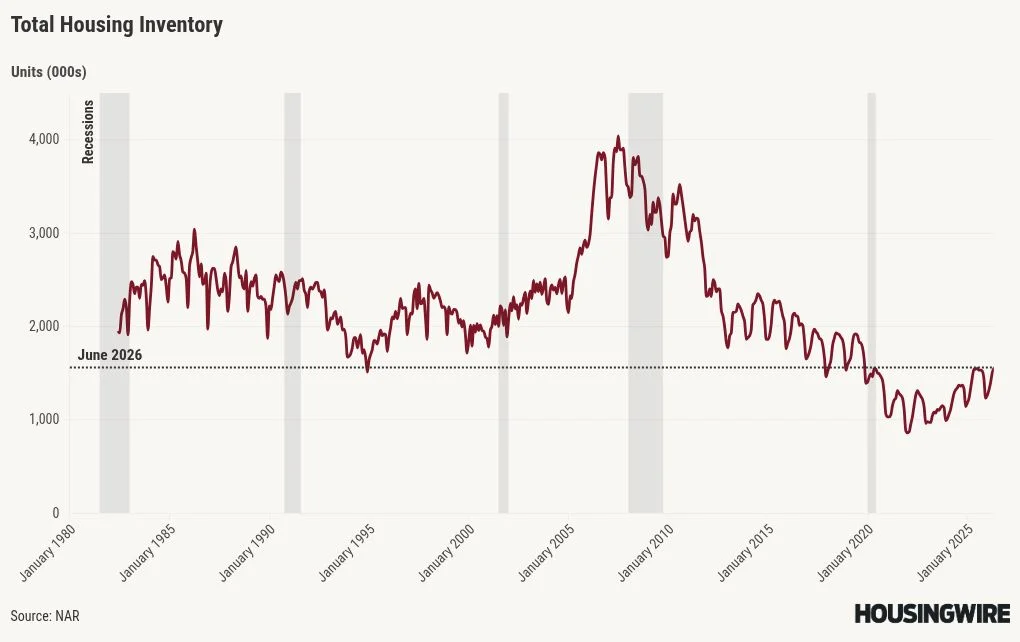
In the latest trends of the housing market, we're witnessing an intriguing play between sustained demand and a dwindling inventory that could redefine our expectations for the coming year. Housing inventory is now on the brink of experiencing a year-over-year decline, a development few anticipated, signaling a potential shift in how we perceive inventory levels amid fluctuating mortgage rates. This situation presents both challenges and opportunities for industry professionals as they navigate a market grappling with mixed economic signals.
The Decline in Housing Inventory
Currently, housing inventory growth stands at a sluggish 0.89% annually, and the implications of this fragile increase are profound. Over the past year, an influx of demand, driven partly by lower mortgage rates earlier in the year, has created pressure on available listings. For perspective, a negative year-over-year inventory is on the horizon for 2026 — an unexpected scenario given the expectations set by previous growth trends. If we analyze the inventory growth from last year, it becomes clear that the surge was accompanied by rising mortgage rates, creating a paradoxical landscape where growth has persisted despite declining inventory levels.
The crux of this issue lies in the tight supply. As mortgage rates fell earlier in the year to around 6.64%, homebuyers responded enthusiastically. This uptick in demand, however, complicates year-over-year comparisons, especially as we look ahead to subsequent months when inventory figures may start reflecting deeper shortages. Notably, the year-over-year comparisons will shift dramatically post-June, potentially setting the stage for a troubling inventory narrative.
New Listings and Market Health
The good news is that new listings are starting to rebound, with recent data showing over 80,000 weekly new listings — an improvement compared to last year's figures. While this number hasn’t yet returned to the 80,000-100,000 weekly listings typical in more stable markets, it suggests a tentative recovery is underway. Such growth, however, must be contextualized against the backdrop of the 2000s housing bubble, where new listings often surged to between 250,000 and 400,000 weekly.
If you're watching these trends, it’s crucial to keep an eye on the upcoming holiday impact. The Memorial Day weekend is likely to influence new listings negatively next week, but the overall trajectory is encouraging. It indicates that sellers are beginning to respond to market pressures in a healthier, albeit gradual, manner.
Price Adjustments and Market Resilience
Interestingly, the pricing landscape exhibits resilience against higher mortgage rates. Traditionally, we see about one-third of homes undergoing price reductions before sale, but so far in 2026, this percentage remains slightly lower compared to the previous year. This speaks volumes about buyer competition even amid rising interest rates; demand has proved more robust than many analysts predicted.
My latest home-price forecast predicted a minor decrease of 0.62% nationally, but recent patterns suggest this might not materialize, especially if mortgage rates push lower in tandem with declining inventory. Current data indicates that the price-cut percentage is stable, with only slight variations suggesting that the market is adjusting without collapsing. This resilience could reflect a broader market sentiment that prioritizes enduring demand over temporary fluctuations.
Pending Sales Trends and Projections
The pending sales metrics also warrant close attention. The most recent figures show a robust year-over-year increase of about 79,370 pending sales, compared to 72,312 in the previous year. This uptick accompanies the current seasonal peak, indicating that buyers are still actively engaging in the market, driven largely by the favorable conditions that were present earlier this year.
When evaluating purchase applications — a vital forward-looking indicator for home sales — we see a mixed bag: a recent decline of 4% week-over-week juxtaposed with an 8% year-over-year increase. This divergence raises the question of sustainability; if mortgage rates surpass 6.64%, could we anticipate a downturn in application numbers? The forthcoming weeks should provide clarity.
Fluctuations in Mortgage Rates and Economic Impacts
As we assess the broader economic landscape, mortgage rates have crept back up to around 6.75%. Notably, the 10-year yield has broken above critical thresholds, reaching highs not seen in recent months. This shift can be directly attributed to the ongoing geopolitical situation, particularly the conflict involving Iran, which has lingered longer than anticipated, thereby influencing bond yields and, consequently, market sentiment. If current negotiations yield a resolution, we could expect a positive rebound in housing metrics soon.
Historically, the relationship between mortgage rates, economic stability, and homebuyer confidence cannot be overstated. If the anticipated ceasefire holds, we may witness a significant adjustment in borrowers’ behaviors, affecting both purchase applications and sales as lending conditions become more favorable.
Looking Ahead: The Market's Next Moves
This week’s market outlook is colored by uncertainty driven by external factors. As analysts digest the implications of any progress with the Iran conflict, ramifications for mortgage rates and inventory levels loom large. Should the bond market react positively to diplomatic developments, we may see improvements in economic indicators, which would liberate the housing market from its current constraints.
In summary, while immediate conditions are fraught with challenges, particularly in terms of inventory levels, underlying trends suggest a market poised for adaptation. Industry professionals need to stay vigilant, tracking both macroeconomic factors and local conditions that influence buyer behavior. The evolving landscape underscores a critical juncture: strategic readiness will be paramount as we navigate these complexities.